ISLAMABAD: The World Bank has urged Pakistan to develop a comprehensive road map for gas-sector reforms, including the unbundling of public gas utilities, to improve efficiency, reduce losses and rein in the mounting circular debt.
At present, two state-owned companies—Sui Northern Gas Pipelines Limited (SNGPL) and Sui Southern Gas Company (SSGC)—serve consumers nationwide. However, their vast distribution networks have struggled to curb losses, contributing to circular debt that has surged to around Rs2.6 trillion.
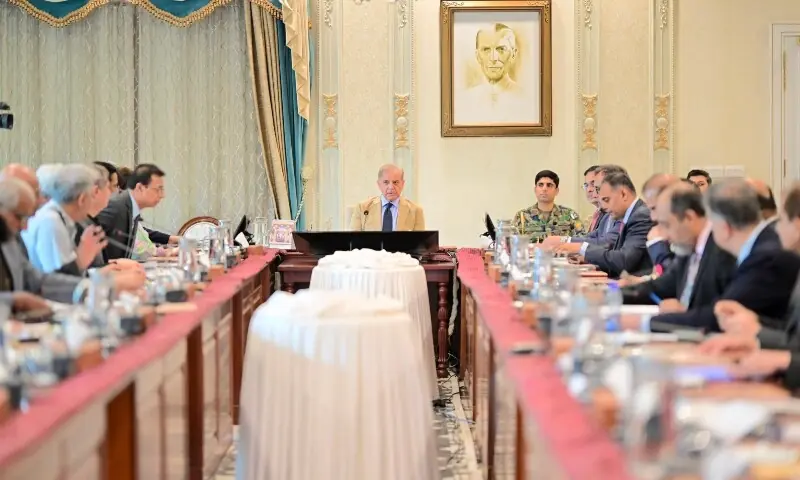
World Bank Country Director for Pakistan Bolormaa Amgaabazar raised the issue during a meeting with Federal Minister for Petroleum Ali Pervaiz Malik on Thursday. She noted that the bank was already working closely with the Petroleum Division to formulate a detailed reform road map, focusing on performance improvement, efficiency enhancement and the unbundling of the Sui companies.
The World Bank has also proposed separating gas transmission and distribution networks and creating additional entities by splitting the existing utilities. Similar reforms, it noted, had earlier helped address circular debt challenges in the power sector, which had remained stuck at around Rs2.6 trillion for years.
The government plans to restructure gas utilities through amendments to the current pricing formula, which is based on a guaranteed asset-based return, and by introducing quarterly price revisions. Although unbundling has been on the policy agenda for more than a decade, successive governments have failed to implement it due to inconsistent policies.
As part of the reform process, the Oil and Gas Regulatory Authority (Ogra) has been tasked with reviewing and amending the gas pricing formula. The regulator has hired a consultant, with the study expected to be completed by the end of December.
During the meeting, Minister Malik briefed the World Bank on ongoing and planned energy-sector reforms, with particular emphasis on gas-sector sustainability. Amgaabazar appreciated the government’s efforts in resolving the long-standing liquefied natural gas (LNG) surplus issue, calling it a complex challenge that required strong policy commitment.
She reaffirmed the World Bank’s continued support for gas-sector reforms and expressed willingness to collaborate on reforms in the liquefied petroleum gas (LPG) sector and on capacity building for Ogra.
The petroleum minister underscored the value of international partners’ input in shaping effective and sustainable policies and reiterated the government’s commitment to long-term structural and institutional reforms in the gas sector. He also highlighted improving air quality as a key government priority, noting that upgrading fuel standards would ultimately require modernisation of Pakistan’s refineries.
Both sides reaffirmed their commitment to continued collaboration to strengthen Pakistan’s energy sector and advance sustainable development goals.
Story by Zafar Bhutta